

How to Capture an Idea
How to save ideas, organize them, and discern which ones are worth pursuing.


Today’s newsletter was made in partnership with Microsoft! Can you even believe that?! Thank you all so much for reading and supporting Feeling! Magazine. I’m excited to share a really practical guide today, with the help of the Surface Pro and the Microsoft team.
In second grade, I wrote and illustrated a book about dogs secretly joining together to form a rock band. A bulldog was the drummer, naturally. I can recall the drama in the story was riveting, and I used an empty binder from my dad’s office and twistable crayons to bring it all together.
In third grade, I self-published a magazine titled “Kids Weekly News.” I made copies in glitter pen until I started using WordArt to design and print more than one copy at a time. Circulation increased, as did its popularity. Columns included an anonymous tip line for class gossip, a word puzzle, comics, and a headline news story.
In sixth grade, having watched a film that inspired me to become an Oscar-nominated (let’s be honest, Oscar-winning) director, I spent a summer looking up what a script looks like and then writing one about secret books. I had my math teacher in mind for the lead character, as he had a grey mustache and that seemed like a perfect fit for the role. I rehearsed all summer how I would convince him to be cast in my debut film.
I have always been a girl with a lot of ideas.
But I’ve noticed that the older I get, the time between an idea forming and actually executing that idea has increased substantially. When I was a kid, the turnaround was almost immediate. An idea popped into my head, and then I got out the markers and did it. But now, I’ve probably let hundreds of ideas die before they ever got a chance to be explored. Why?
Do we become more sensitive to everyone’s perception of us? Do we self-reject to avoid a potential rejection of our work? Is life so full that we cannot squeeze one more thing into it?
Whatever the underlying reason, I think it’s true that most grown-ups lose their ability to act on a creative idea efficiently. I suspect fear has a lot to do with it.
I’m preparing to launch a greeting card business in August and have spent most of this year ideating and planning this entrepreneurial endeavor. Methods for stewarding and executing creative ideas have been top of mind.
How do I know which ideas are good?
How do I not feel overwhelmed by all the paths I could take?
Today, I’ve made a guide with very practical tips for getting back to that childhood approach to capturing and executing your ideas, with an adult sense of clarity and decisiveness.
My hope is that it helps anyone who has a lot of ideas but gets overwhelmed with the execution end.
This is designed to help you with anything from planning your own newsletter, launching a business, or even designing a home menu for your weekly grocery tips. Save and come back to this as needed!
1. Write It Down: Making Space for Ideas

First, you must make physical space for your ideas to live. Sort of in line with the “build it, and they will come” philosophy, if you make a space for something, you are more likely to engage with it. Put fruit out on the counter, and you will likely eat more fruit; put books on your nightstand, and you are likely to read more before bed, etc. We are able to shape our own behaviors through intentional lifestyle design.
If you’d like ideas to flow more freely, you have to make a safe home for them to land.
I’d recommend a specific blank space used only for storing ideas. This could be a digital space like a Surface Pro, which utilizes the Slim Pen for handwritten note-taking, or you could use a paper journal. Whatever method makes you excited to write it all down is best (perhaps a combination of paper and digital), as this ensures there is always a place to store your ideas. At home, make sure it is somewhere you will see it throughout the day. Keep it physically on you when you travel.
Your first job is to write down ideas as they come, without judging them. (This is harder than it seems!)
We will get more into this later, but for now, designate that notebook as an extremely safe place for any and all creative thoughts. It could be passing ideas as simple as a new product concept, a topic you’d like to write about next, a quote that inspired you, or a coffee flavor you want to try and make at home.
At this stage, the journal must be free of any questions regarding how viable something is, if it will produce income, when you can execute it, or what people will think of you when you do execute it.
Thinking of performance will kill your imagination, so be very protective of the ideas in this notebook.
Your ideas should exist with a sort of freedom. They don’t need to prove anything yet.
Recall any of your doodles, sketches, or thoughts jotted joyfully in the papers of your childhood. The lazy rivers drawn in living rooms, roller coasters in backyards, and dog rock bands too.
That kind of freedom to think creatively is what you are trying to get back to in step one. Just write everything down; we can assess ideas later.
2. Make a Plan: Organize Thoughts Effectively
Once your imagination recognizes you’ve made a safe space for all of its ideas to land, it will fire up a bit more. You may find thoughts popping up more frequently; new dreams could even emerge. The idea notebook can become a bit of a beast and will need some grooming. You need to sort and organize.
Organizing your thoughts will help you move from idea to execution with more confidence.
Often, hope looks like a plan.
If you want to execute something, you must give yourself a reason to believe you can actually do it. A straightforward organization of ideas is the way to decrease the barrier to entry.
This is when I take things digital, polish them, and clean them all up in a document I can easily access whenever needed. I like the notebook feel, so I will use a hand-drawn concept map. A very colorful Excel sheet works wonders as well.
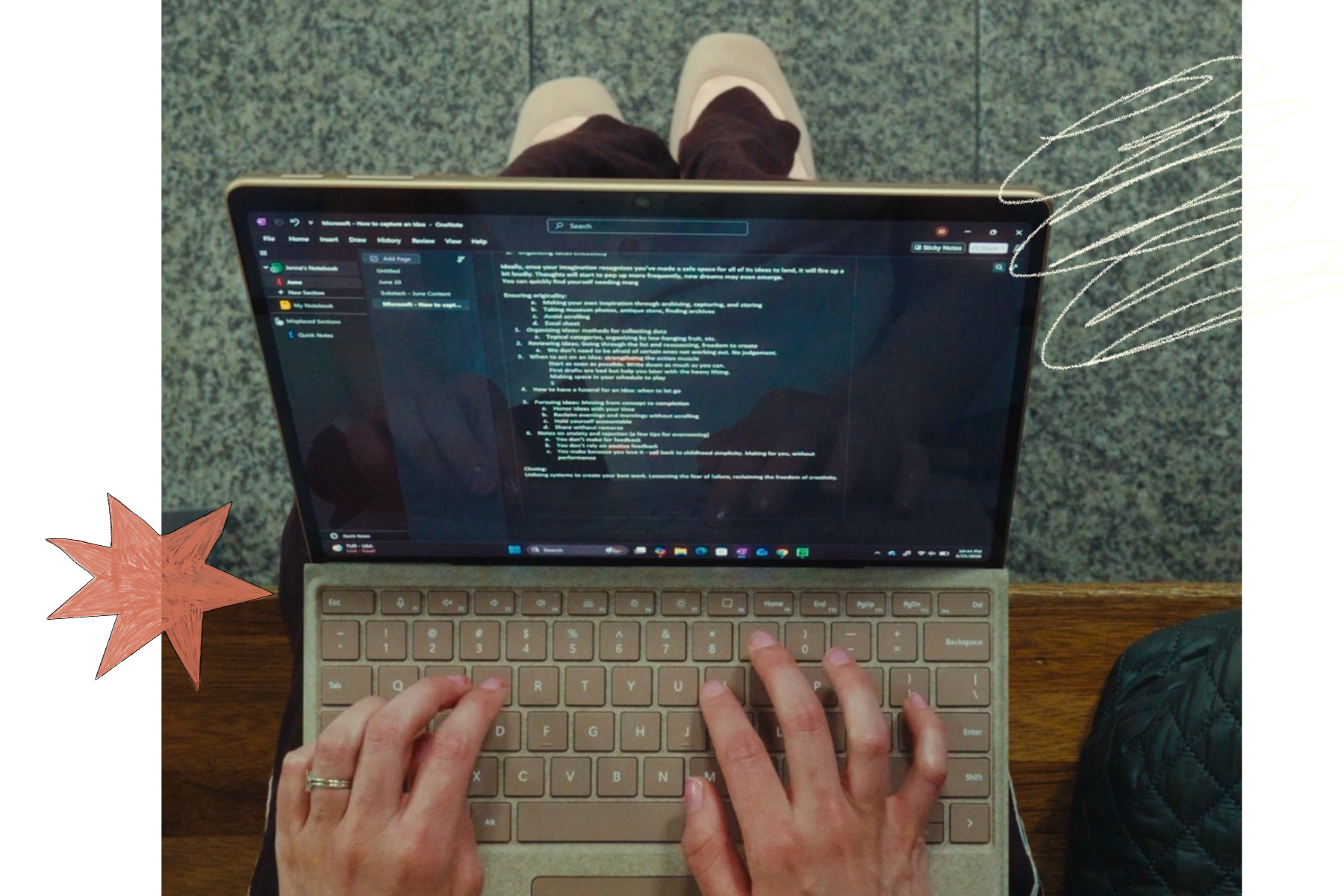
I’m using the beautiful 13-inch Surface Pro in the Dune color (I always find it worth mentioning when a piece of technology comes in a good color). The screen detaches easily from the keyboard, and I am able to write directly on it with the Surface Slim Pen, which feels lightweight and natural to use, even for long written pieces. I’ve been using OneNote to jot down ideas as they come, and it immediately converts my handwriting to text. That way, I can transfer the text to a more concrete spreadsheet.
I’ve used the Concepts app as a freeform map for planning out my ideas. Here is a sample of how I’ve organized various ideas:
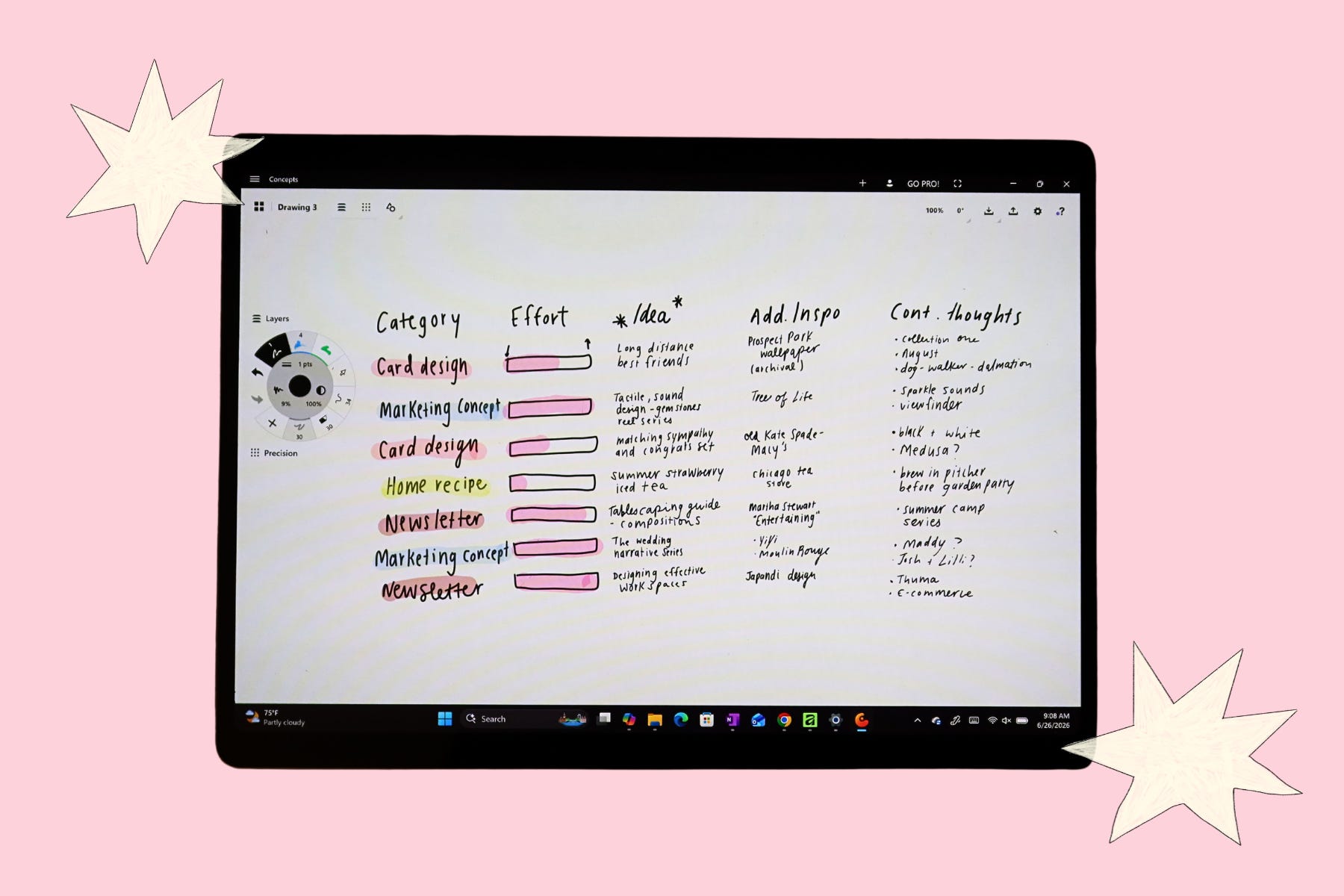
Here are categories I use to help organize my thoughts.
Category of work: What kind of work is it? (ex: writing, illustration, home project, etc.)
Effort: Is this a project that requires high effort, low effort, or somewhere in between?
Additional inspiration: What thoughts preceded this idea? What should I go back to look at to be reinspired? (Insert your own images here if needed too. Phone snapshots of a book cover at an antique shop, the color palette of an ice cream shop, etc.)
Continued thoughts: What thoughts followed this idea? Jot down everything that came to mind. The more context you add now (whether or not it’s even great), the better. It will help you later!
I’m also sharing a very summery set of color codes for sprucing up your next Excel sheet with custom colors. Making it beautiful will make you more likely to enjoy working on it.


To change a cell color in Excel:
Select the cell you want to change
Go to “Home,” click the dropdown arrow next to the paint bucket (fill color)
Click “More Colors”
Select the “Custom” tab
Delete what’s in the Hex field and type a hex code from one of my images (on the bottom corner of each swatch!)
Hit “ok”
Once you have created a simple organization system that feels fun to use, it is time to evaluate the ideas.
3. Start Creating: Moving from Concept to Creation
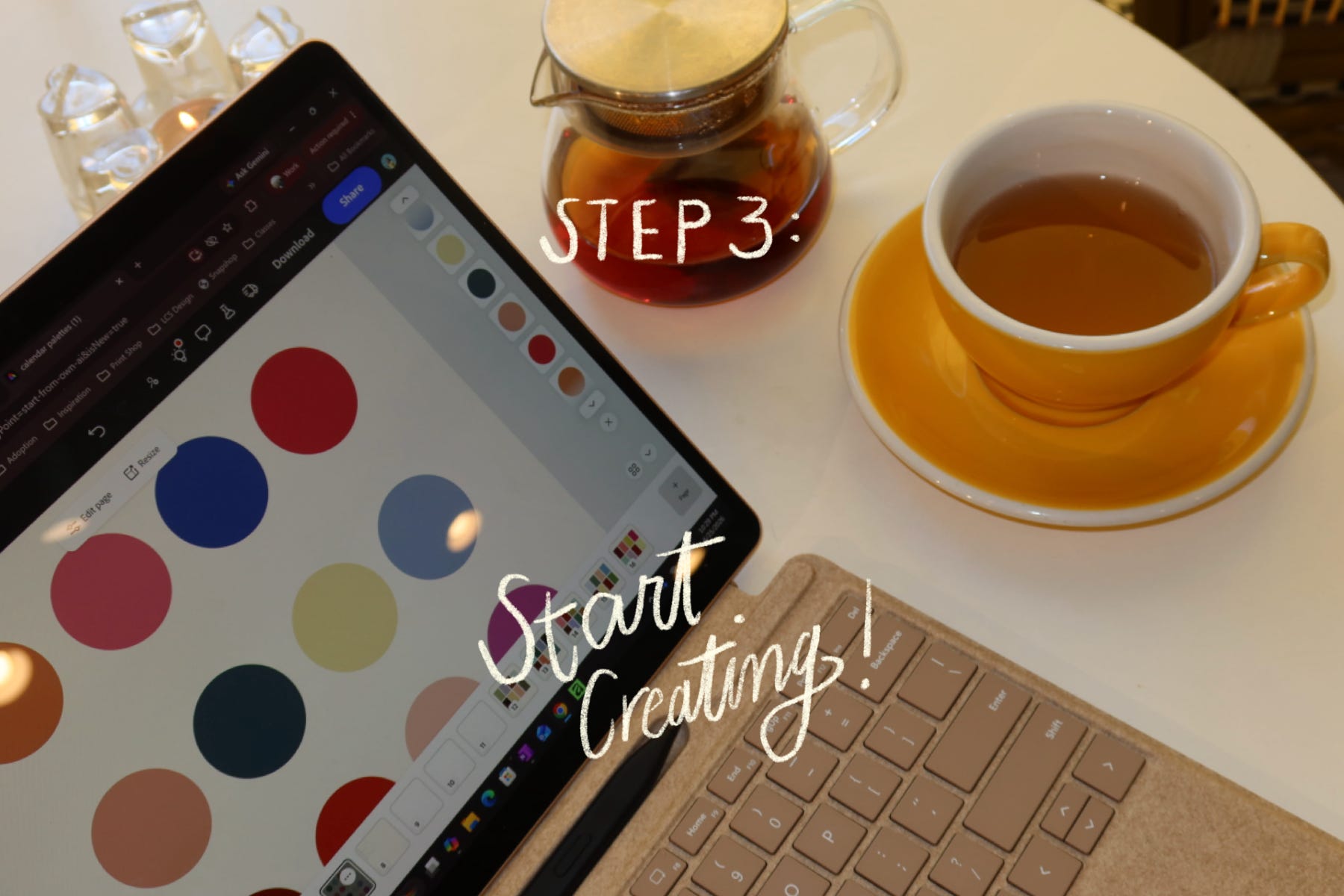
List-making is fun and allusively feels like you’re getting the work done, but getting started is still the daunting part.
Deep breath. Always start here: What’s one thing you can do today that gets you one step closer to creating?
It could be a sketch, a photo, or a paragraph. Creative people loooove the dream of hours of uninterrupted time to work, but realistically, those opportunities are slim. Blessed when they come, but slim! Working on your creative endeavors more often looks like making one brush stroke at a time.
The good news is you’ve created a lower barrier to entry for concentrated work because you’ve done all the prep work of articulating the idea and categorizing it.
Flushing out an idea quickly is essential. If you let them simmer too long, they may flutter away. This is where you also discover things like their viability, cost, and if you even like the idea in the first place.
First drafts are usually very bad, but they do the heaviest lifting for future you. Write down as much as you can about your idea, capturing every thought as it comes. Practically, this can look like bullet point lists, with simple writing to get the point across.
If you are a list-making kind of person, break the concept down into small steps. Then come back to the central question: What’s one thing you can do today that gets you one step closer to creating?
Set a timer for fifteen minutes, then do that one thing. Even if it’s messy and imperfect, it’s important to prove to yourself that starting isn’t as scary as you made it out to be.
You’ve done the hard part in capturing your idea and organizing it, and you’ve made the starting line very easy to cross. Now it’s time to make the creative idea come alive, step-by-step!
Notes on fear & rejection, and some tips for overcoming:
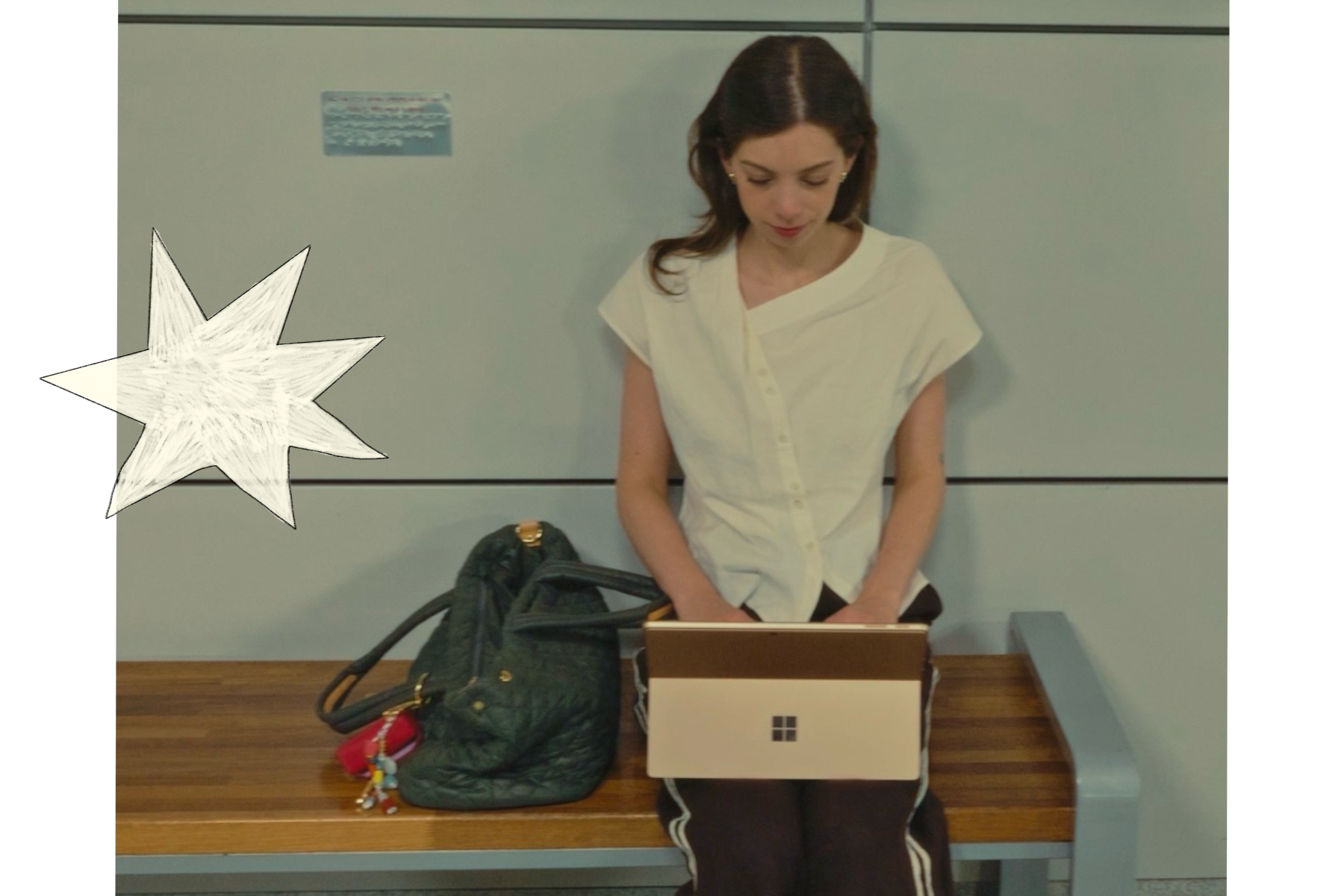
This system works best when you’ve addressed the underlying feelings as well. Primarily, fear.
I’ve been making art and sharing it online for almost 10 years now. It’s a career choice that is really fulfilling and beautiful in many ways, but also a path that has profound effects on how I view myself. In the decade I’ve been at it, I have had to learn & re-learn to protect myself, my creativity, and my ideas.
Here are some hard-earned lessons (in no particular order) that really help me steward my internal world despite sharing it externally:
Don’t make things for feedback. When you are in the “making” process (whatever that medium may be for you), do not actually think about the feedback you will receive at all. Just make.
I lie to myself when I say scrolling will help me think of new ideas. You might say this to yourself, too. But remember, scrolling is artificial. We need real stuff to get good, original ideas. We need sliced clementines and neighborhood cats to spark our imaginations. Leave the phone behind and engage with new points of view in your surroundings!
Your creative work does not rely on positive feedback, and you do not have a right to it. When I was younger, I’d be rocked when a post didn’t receive “enough” likes. But no one owes me likes online. It’s a nice, astounding thing when someone does notice my work, leaves a heart, a message, etc. I think of it as a generous gift, not something I am owed, because I’ve learned not to do the work for feedback in the first place.
Do creative work because you love to do it. If you are going through the trouble of working on your ideas after hours or investing in a big project, you must love the work itself above all. I am so glad you are all here. If Substack burned down internally and I lost every single reader I had, you’d probably see me start writing about the same stuff again because I love to write about this stuff. It’s crazy how much we self-impose creative projects that are unrelated to what we love to do. Keep clear on what you love to make, and protect it.
I am excited to keep using my Surface Pro to capture business ideas, run the Feeling! Press e-commerce store, and create on the go. It’s been tucked in my tote for three weeks as I’ve been traveling but still working, and I have truly tried out the device and am impressed. I encourage you to check out the Surface Pro (especially in the pretty color) if you are looking for a lightweight workhorse that gives you back a handwritten feel to your process. It’s kind of a newsletter writer’s dream scenario: write your stories with a pen, but it types them all up for you! Dreamy. Here is the link to explore the new Microsoft Surface.
I’d also love to hear your next creative idea you’re working on in the comments. It could be anything — from your next article to a painting to a closet reorganization — please share! Some lucky commenters may get a little inspiration boost (from me to you) as a pick-me-up!
You’re Invited to Talk over Tea!
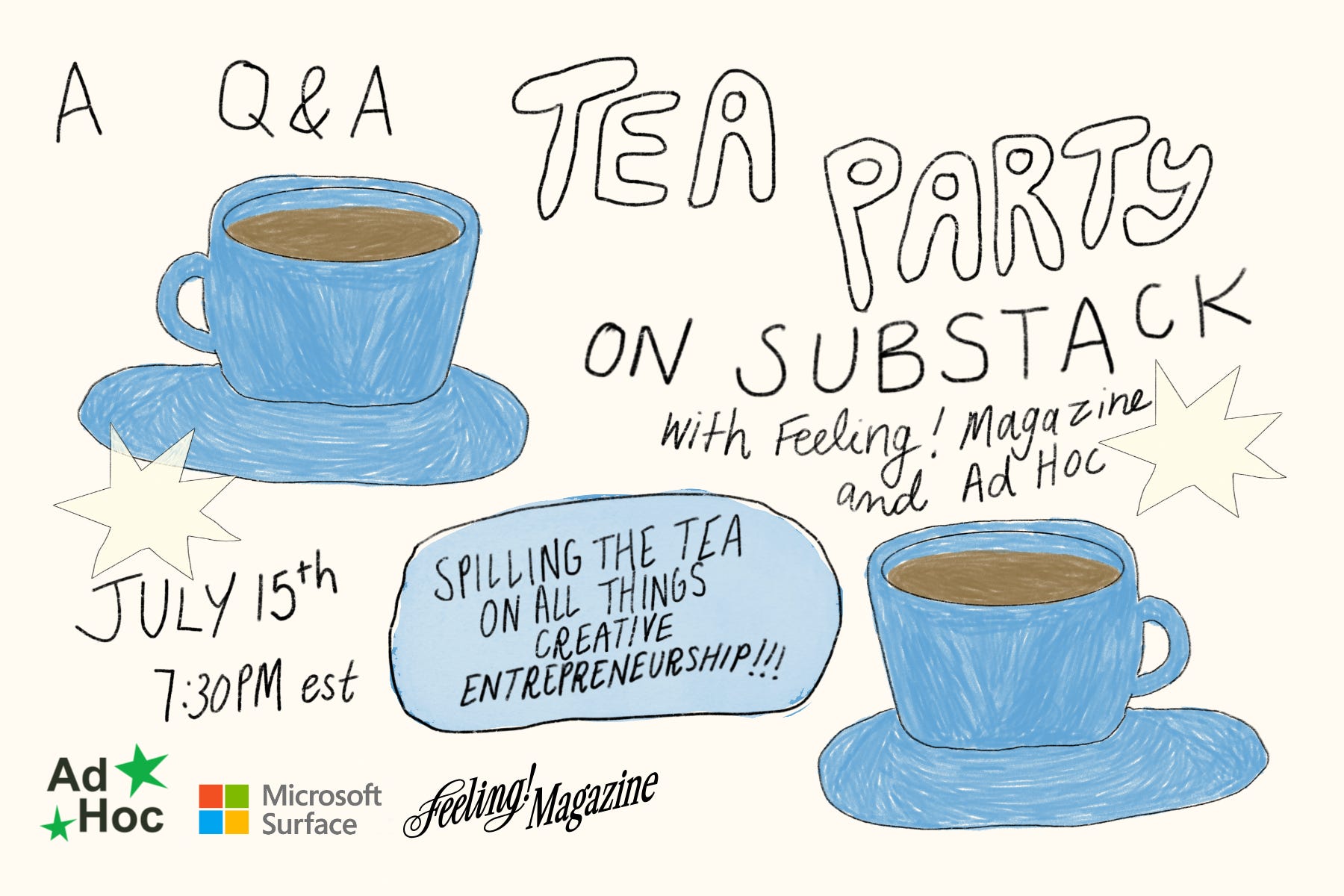
I am going live this Wednesday with the amazing Arden Yum to talk all things entrepreneurship…specifically creative entrepreneurship. I always like to be an open book, so feel free to drop any questions you want us to go over in the comments. I would love to be a help to you! I’ve never done a Substack live! Please join the party (with a cup of tea) for a very cozy and insightful inaugural Live.
Join here, on July 15th at 7:30 PM EST.

JOY-SCROLLING:
July Print Dispatch

Wishing you a delightful summer Friday! I am introducing a new, monthly gift for paid subscribers today. I do not say often enough how grateful I am for you.


🐚 Read more thoughtfully created articles here
🪄 Shop all my favorite things
🍒 Let’s be internet friends, please! @ jennaisfeeling
🪄 Get more inspiration
Working with brands and businesses helps me make this magazine dream come true! If I do work directly with a brand, I am very picky about it, and I disclose the partnership to you, my readers. A few of the links I included in this article are from ShopMy, which gives a small payment if someone buys a product from a recommendation. This helps fund future creative projects for this publication — thank you!
P.S. Telling my Substack friends before anyone else…new secret Instagram for the upcoming greeting card business is here. I would love to have you join the journey and see some familiar names!
Love this, and it was so inspiring! I was also the kid who did all the creative things as a child, free from fear. I miss that feeling!
After having an idea bubbling in my head for a novel for multiple years, I decided to go for it this summer and started plotting/dreaming/researching/writing. It's equal parts exciting and overwhelming and I am similarly reminding myself that I don't need to prove anything yet. I was telling my friend, it feels like half the creative process is just having the audacity to go for it, instead of listening to all the self-doubt. Similar to your process, I'm currently writing a lot in my journal-- I feel like the ideas come easier with pen and paper, but then polish as I put it into digital form. Love the phrase "hope looks like a plan."
Anyways, thanks for sharing this today, it came right on time for me. Love following along with you on here and excited for your new business! Yeehaw for creativity!
Making a safe home for ideas before asking them to prove anything is such a useful distinction.